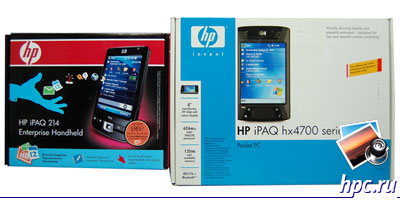
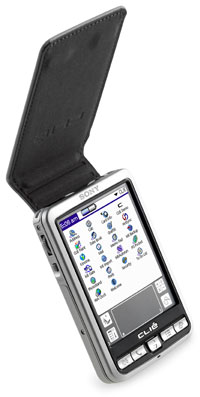
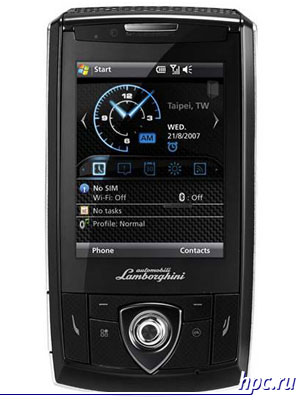
History repeats itself. Moreover, repeated intentionally. Holding a new top-end PDA HP iPAQ 214, once it becomes clear - the company's marketers have tried to do everything to make it so, but also to maintain continuity. And how could it be otherwise? HP 4700 was very popular, but had some shortcomings, which sought to eliminate. Have it, we'll try to find out, each for himself, naturally. HP iPAQ 4700 reigned for a long time, as many as in 2005. Tsarstvuya, he had no rivals in versatility: the biggest screen, the longest battery life, metal body, an innovative management system (touch pad), the possibility of upgrading the operating system from 2003 to 5.0 and then to an informal six-ku (though not without some difficulties, but that worked too!), graphics accelerator, and the best processor available. Follower waiting. Welcome, beating heart - oh, what, what new and wonderful will come up in HP? It seems that almost all of the ideal of the 47th. Is it that there is no official Windows Mobile 6, but did not provide support SDHC yet. And here he came. Came and proved that all new - is well forgotten old. And it is not always worth the rush to the store for purchase at a breakneck pace, waiting for miracles and magic.
 |
Recall that the HP iPAQ 4700, and not only he but also many models from HP, manufactured in conjunction with HTC, which is now itself "with a mustache, successfully producing communicators, and although it retained the manufacture of devices for other brands, but not in amounts as previously. And then HP got down to business on their own, projecting first HP iPAQ 114, and then his brother - 214. And, as paradoxically, be regarded as the 214th successor to the 114th will be far more logical than the descendant of 4700. After all, in fact iPAQ 214 - the same 114, but with a VGA-screen. But we have something to users, what's the difference who was there at some factory assembled and designed by our favorite toys? We expect innovation, we expect progress. So where is he, progress iPAQ 214 compared to the iPAQ 4700? Let's face it.
Design and Ergonomics
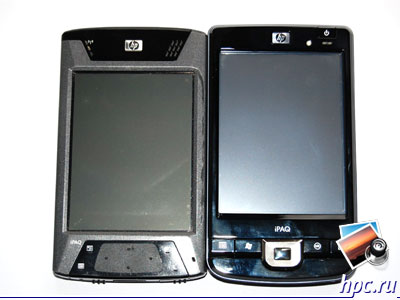 |
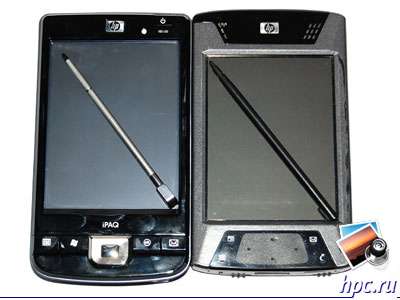
| HP iPAQ 4700 and HP iPAQ 214 |
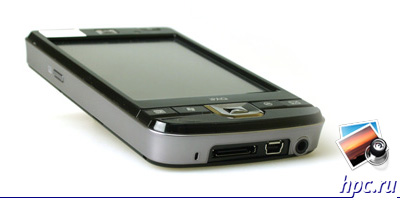
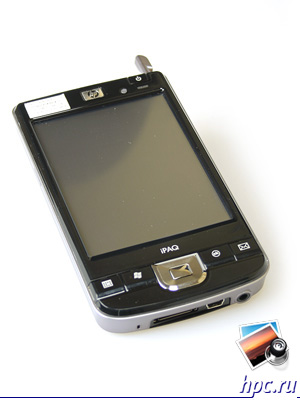
The first thing that you notice - the size of the unit. He put it mildly, the big, bulky look, though its dimensions virtually identical to 4700. Most of the front panel has four-inch screen, and under it - yes, a miracle happened! - Rather than showy, but inefficient touchpad and "pimple", replacing the button, the normal buttons and dzhoypad! Hurrah? Of course, cheers. What a grand piano - with no buttons? Convenience of their difficult to overestimate, and lack of it - is what keeps many from buying the 4700. But there has not been without incident: the joystick frankly too small, and the "up" to press at all unrealistic: it is located flush with the plastic panel.
Novelty is much thicker and heavier than its predecessor, although the 47th made the metal, and the 214th - from plastic. Hide the disappointment is difficult, although the materials used for the 214th, very good. However, any plastic, even the best quality, looks and feels quite differently, such as metal.
| Unfinished Piece for piano in the bushes "width =" 400 "height =" 234 "/> |
In comparison with the now fashionable iPhone, our hero and looked at all eccentric uncouth huge brick.
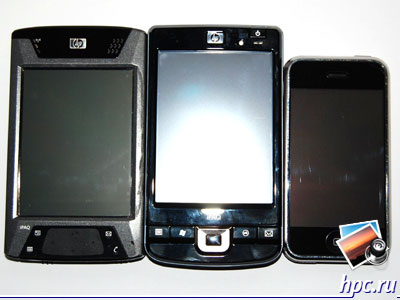 |
| HP 4700, HP 214 and iPhone |
With the size and thickness of the device developers are frankly too clever by half. Judge for yourself: the usual PDA with VGA-screen without the built-in GPS / camera / GSM. Where did such size and thickness? Why? Four-inch screen was quite happy in dimensions of 4700. Battery size is the same. Similar-sized 214th approaching the smallest computer to date, for example, Sony UX. Agree, but their functionality will be to put it mildly, richer. But back to our plastic hero. Front panel - black, glossy, reminiscent in appearance and to touch the piano. Fingerprints are on it, but her hands do not slip - try to hold his hand with a push on, say, the polished table, or on the piano, and you'll understand what I mean.
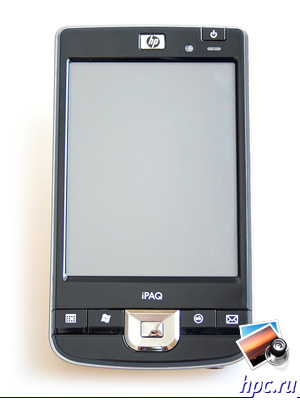 |
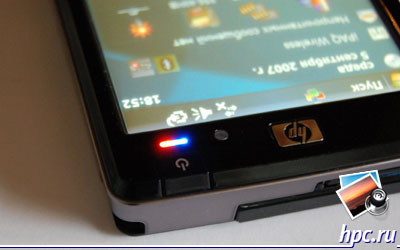
Above the screen in the center of the logo HP, serving speaker for VoIP-telephony (the microphone is located on the bottom, along with other connectors). Right - a power button and indicator of wireless connections and charging. The indicators are very bright in the dark frankly annoying.
The rear half of the body is made of the now fashionable plastic coated with Soft Touch. She is also black. Between the lid, which hides under the battery, and the upper part there is a gap. Maybe it was left intentionally, to make it easier to remove the lid, but looks like an obvious omission. Above the gap is the speaker. As is the case with the younger brother - iPAQ 114 - the controversial decision, because whether it's watching a movie or a GPS-navigation, the sound will come from the owner of the machine.
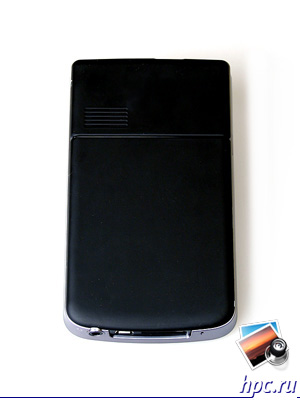 |
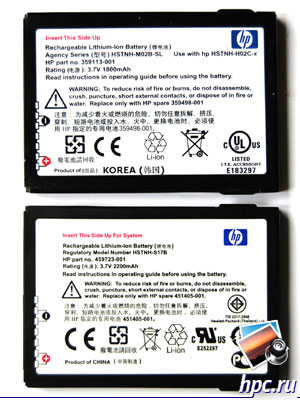
The PDA is made slightly tapered to the rear, so it seems that he can slip out of hands, but it is not. Soft Toch-plastic downright "clings" fingers, and dropped the PDA can only be special. Fingerprints remain on the newfangled surface, remove them by hand or with a dry cloth is extremely difficult. Now it is difficult to say how durable Soft Touch: skeptics assert that the angles protrutsya pretty quickly. Well, time will tell. Let's see what's located under the lid of our grand piano lacquer. And then the battery is 2200 mAh! As far as him missing, read in a separate chapter. In size it is the same as the battery hx4700 (1800 mAH), both batteries are interchangeable. The cover is removed from the force, in the distant future, if you often want to change the battery, can play. On the new machine, it sits tight, squeak is not observed, as well as throughout the body.
| Unfinished Piece for piano in the bushes "width =" 400 "height =" 300 "/> |
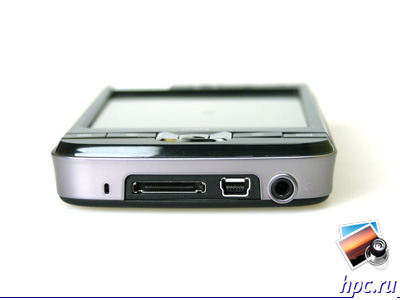
At the bottom end we will have one more pleasant surprise - it's a standard connector miniUSB, the same as with most smartphones, cameras, etc., that is always and everywhere you can find at least a cable to recharge the PDA (although , charging from the miniUSB lasts about 6 hours), to throw him some information from someone else's computer.
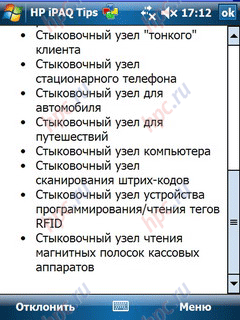
Interface connector to our deepest surprise, changed. That is the old charging cradle will not work.
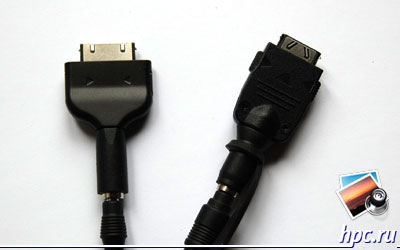 |
| Connectors: left HP 214, HP 4700 right |
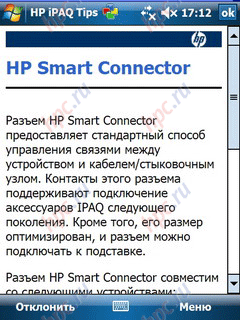
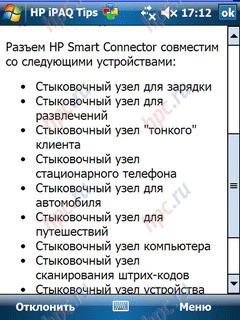
Party's policy on this issue was completely incomprehensible until now, digging in the interactive instructions to the CCP on the PDA (called the iPAQ Quick Tips), we found an interesting page, lifts the veil of secrecy:
 |
 |
 |
Next to the connectors was found minijack 3.5 "headphone jack. Finally, HP moved this miserable hole away from the pencil-box stylus! Now stick the stylus in the headphone jack, as it liked to do many owners of old," AIPAC, "would be extremely difficult. For the better change stylus, at least outwardly. Now this is not a faceless black cheap plastic, and steel rod with a gray plastic top and soft enough not to scratch the screen tip. on the convenience, he pulls the "Quartet", but feels that it is easy to break as, for example, the FS Loox - "broken stylus" often forced the owners of 720 and other models run on the shops in search of spare "sticks." Perot iPAQ 214 and thinner stylus 47th, which is very noticeable to the touch. One would think, why does not make it bigger and thicker, because body allows? But no, along with a massive heavy body, we have an aristocratic thin rod.
Continues to please, and the fact that the foam stylus is still in the upper right part of the body.
| Unfinished Piece for piano in the bushes "title =" HP iPAQ 214. Unfinished Piece for piano in the bushes "width =" 400 "height =" 300 "/> |
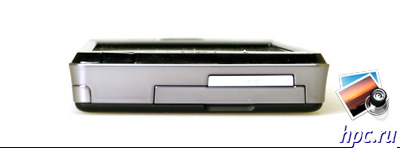
There, on the upper end there are two slots for memory cards. Compared with 4700 the phone supports SDHC. Slot for CF is made not so successful as its predecessor. Map pretty much sticks it in the first place. And secondly, to pull it very difficult because of the crude grooves.
Boca devices are not full of buttons. On the left caught on a voice recorder button is located flush with the body. This makes it useless for use as a scroll when reading. On the right - soft reset button. This is key, as is the case with the iPAQ 114, rather than a "hole" as in old AIPAC.
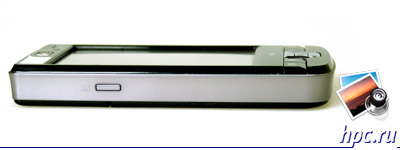 |
| HP iPAQ 214: the left end, a key recorder |
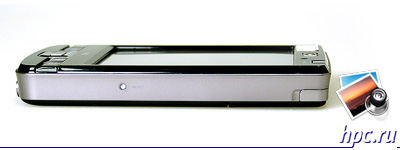 |
| HP iPAQ 214: right end, key reset |
To sum up the comparison looks a little "newbie" and "old man". iPAQ 4700, certainly looks presentable. Metal enclosures are now "on the horse, it is worth recalling at least the same Nokia 8800 or 6300, or the Apple iPhone, and even Sony Ericsson have already switched to metal phones such as T650. Popular now and thin device, the list above can be repeated. The policy of HP, has issued a plastic tolstyachka as a top model is not very clear and understandable. Features of both models are almost identical at first glance, let's see what someone is better:
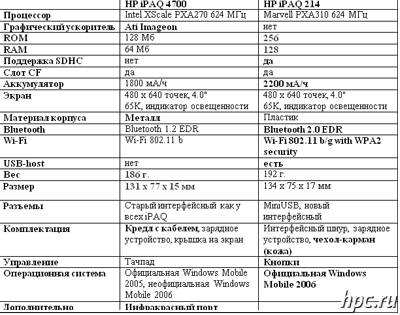 |
| Comparison of characteristics of HP 4700 and HP 214 |
Screen
On the screen you want to stay more because he is one of the "chips" HP. We begin with a brief excursion into the past. Immediately after the exit screen 4700 provoked a storm of debate. His praise, praise deservedly. True, there were judges, who argued that the color reproduction of shades of one color iPAQ 3970 will be better ... But it is minor compared with what happened to the screens later. The first batch had a screen with a really white. A year later, there were 4700 with a pinkish hue, but in the end all of the 47th received the revelation of yellow screens. The vast majority of users left in the dark (it is for the better, people were happy), but many noticed the difference. Incredibly annoying yellowness, the more so that the competitive CPC was not a yellow. This is all to the fact that the 214th screen is very yellow. It is noticeable, even if you do not put a number of other devices.
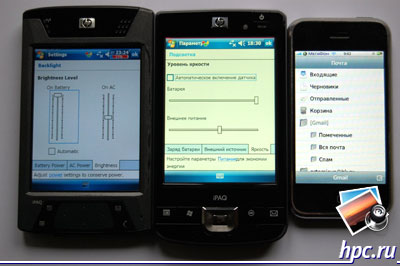 |
Just like 4700, HP 214 has a light sensor. Complaints about his work there, the sensor time monitors ambient lighting. With regard to regulation of levels of backlighting, everything remained as before: about thirty levels (they were not recorded steps):
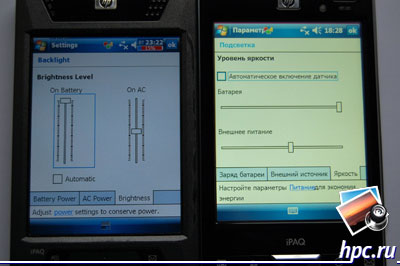 |
Minimum backlight level is comfortable for reading in the dark, however, due to different screen structure in the light to make out anything is difficult. And with backlight OFF and did not see anything. I do not accidentally let slip it on the structure of the screen. As soon as the 214th came into my hands, I immediately noted that someone had already stuck it to the screen the film, not some any and Covertec or Brando - in their style of doing rough matte film that does not glare, does not reflect, but at the same time, several blurs the image (compared to the glossy smooth film Onext, XDM). However, after a little research revealed that the film-and no, it's the screen itself is. At the head right there crept the thought that all this is no accident, surely some deep thought spodvigla developers for such a decision. Ideas were born two: first, users no longer need something to glue to the screen - to scratch a matte finish is very difficult, and secondly, with GPS-navigation, or simply by using PDA in bright sunlight the screen should in theory behave very decently . Both ideas can be called fair, because the sun can really be comfortable working with a device that is important, given the approaching summer. Myths propagated on the forums about what to find film for the 214th is unrealistic, since the screen 214th greater than the 47th, are indeed myths. Screen sizes butt for iPAQ 214 and 4700 respectively and 84h64mm 83h63mm. Films from the iPAQ 4700 you can find all sorts and kinds of ridiculous prices. If you stick with the mind - namely, the center of the screen - the gaps above and below would be quite insignificant and not worth discussing. How such a convenient screen is suitable for surfing the net - to solve each individually. Someone will be more satisfied with the iPhone with the smaller screen, but the possibility of finger control, and someone delighted with the stylus and a slightly larger screen. On the question of governance. Screen at the 214th is very hard. If at Tapanui in the central region is not as noticeable then the edges have to dent the stylus on the screen. Recalibration does not help if the calibration touch screen with stylus lightly, the device will offer to pass the re-calibration. In conclusion, a theme you want to draw attention to its location. If 4700 is located exactly on the center, the 214th strongly shifted upwards. Maybe this location has added a sense of the apparatus cumbersome, but in any case, I think readers will agree with me, symmetrical 47th looks much more attractive asymmetric 214th.
Speed and memory
HP iPAQ 214 is built on the new Marvell PXA310 processor with 624 MHz. Recall that 4700 was Intel XScale PXA270 processor at the same frequency. If you follow the news that went online recently, you can see what top-end CPU Marvell is not 624, and 806 MHz. For some reason, a top handheld has not received top processor, it's hard to say. Probably because of financial considerations or the lifetime of the battery. Anyway, hope remains that HP is preparing a surprise for fans of the CCP. How realistic is faster or that the processor will help us determine the tests. It is worth mentioning that the iPAQ 4700 is installed Windows Mobile 6.0. Why not 6.1 - the question is no longer with us. Update yet.
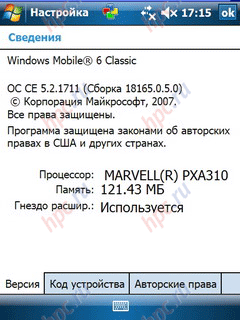 |
| HP iPAQ 214: the operating system WM6 |
| Unfinished Piece for piano in the bushes "width =" 240 "height =" 320 "/> |
| HP iPAQ 4700: Informal WM 6.0 |
Let's start with life tests: how long it takes to open files?
 |
| Time to open files HP 214 and HP 4700 |
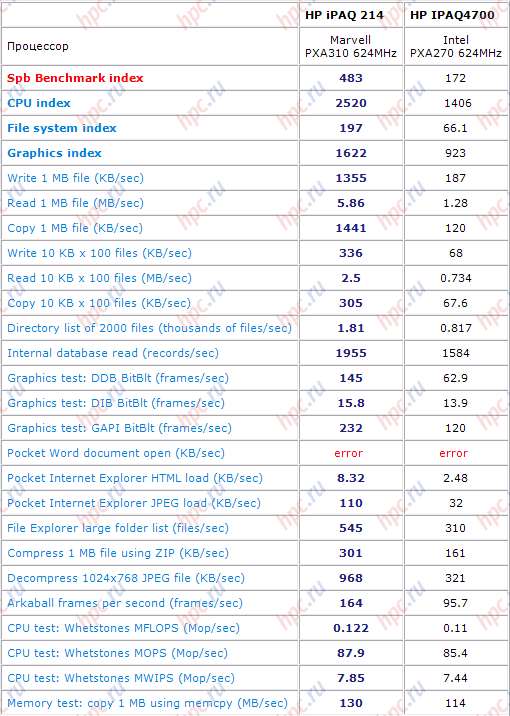
The new iPAQ was slightly quicker and smarter. Let us turn to the synthetic test Spb Benchmark.
Now look at the results of the test VSBenchmark. iPAQ 214 left far behind the nearest competitor, and 4700 and completely numb at the end of the list. Unexpected result, is not it?
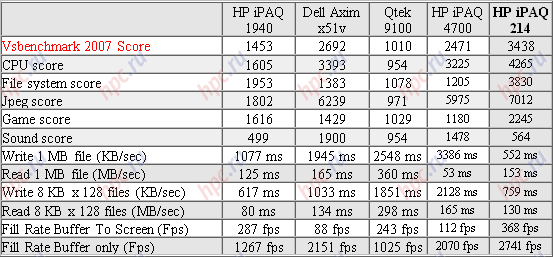 |
| Test results VSBenchmark |
What is really different from the brand new AIPAC old man, so is the amount of RAM. If in 4700 it was 128 MB ROM (available 82.59Mb) and 64MB of RAM (57.81 MB available), the 214th has on-board 256MB of storage (ROM), available for use 163.05Mb, and 128MB of memory (RAM), from is available to the user 121.40Mb.
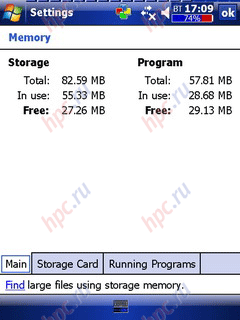 |
| Memory allocation in the HP 4700 |
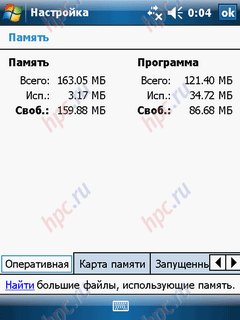 |
| Allocation of memory in the HP 214 |
Moreover, in the 214th resumed the good old tradition since Windows Mobile 2003 - iPAQ File Store, a block-volatile memory. Under his allotted 24Mb. The appointment is not entirely clear, because the new operating system, even when the discharge in the "zero" does not destroy your documents. But there are - and thank God.
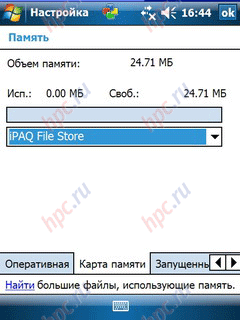 |
| HP iPAQ 214: iPAQ File Store |
CCP supports two types of memory - CF and SDHC, space constraints do not, therefore, would be money, but to expand the memory up to 32GB 16 GB machine will allow. Good news for users of 4700: now the device does not disable the card slots, if the charge in less than 10%. And for a snack joint test program TCPMP and go smoothly to the testing of a multimedia device. One of the main advantages iPAQ 4700 has been and remains the ability to play unconverted video on a huge on PDA screen shnom standards, achieved through the sharper the CPU and graphics accelerator. How much progress in this direction the 214th? Alas, tests TCPMP is far from comforting. Lack of graphics accelerators will undoubtedly impact on the ability to play, and the processor, supporting accelerator in itself, a stranger old version of TCPMP. As a consequence, do not use the program (something similar was observed immediately after 4700, when TCPMP also showed low results because he was not familiar with the new graphic accelerator). It is hoped that it will be used in future versions of the program. And until the results came out the following:
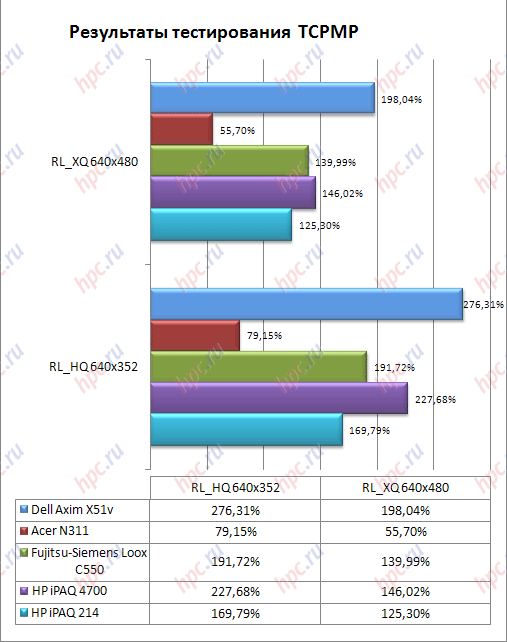 |
For comfortable viewing of most films iPAQ 214 is suitable. When trying to run "heavy" AVI size of 1.5GB (720h400) were observed freezes or dropped frames, while in 4700 the film went without a hitch. Image quality level, while 4700 winner and a bit in this parameter due to the fact that the screen is glossy, not dull, like the 214th.
Sound
As for listening to music, then - alas! - All is not so rosy. First of all, a proprietary utility iPAQ Audio, which allows to adjust the equalizer, ceased to exist in the new handheld. It happened the same change as in the 114th model: now you can only adjust the microphone sensitivity.
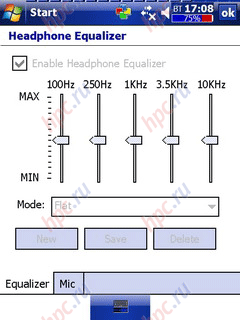 |
| Equalizer in the HP 4700 |
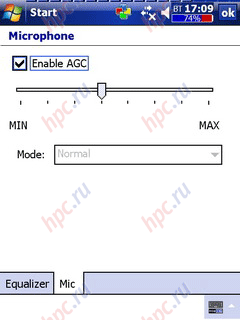 |
| Setting up a microphone in the HP 4700, so Mrs. option on the HP 214. A EQ, alas, no. |
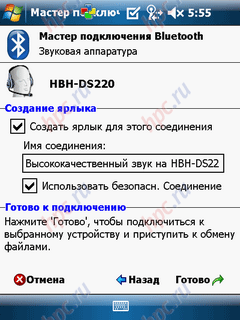
Perhaps this change can not be called really nasty, because there are plenty of players with a customizable equalizer. The sound quality is tested on reinforcing earphones Ultimate Ears super.fi 3 studio and inexpensive Cresyn LMX-E630, used by players: Windows Media Player, GS Player, 40iPlay Client. The difference in sound quality is not very evident, perhaps, the volume of the 214th bit lower. In general, devices sound the same. This assertion was valid as long as to both the device was not connected to BlueTooth-headset SonyEricsson HBH-DS220. Pattern observed by us in the iPAQ 114 for a pair with this device, repeat: noise, wheezing. Play is not possible, in one word. While the iPAQ 4700 headset works fine. What a "glitch" is the place to be - BlueTooth driver incompatibility with a particular headset, damp firmware (firmware is the device in the screenshot) - hard to say.
 |
The quality of the recorder at the secondary level: in the silence of the sound is written well, while much noise when the voice is difficult to discern.
Wireless and wired interfaces
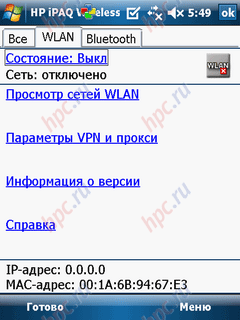
Manager of wireless interfaces, radically redesigned. If before it was called the label in the lower right corner of the screen, but now (as in the 114th), we have a separate line for Today-screen. On subjective view, the solution is not very convenient.
| Unfinished Piece for piano in the bushes "width =" 240 "height =" 320 "/> |
| The label calls the Wireless Manager HP 4700 |
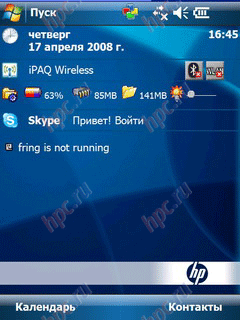 |
| Today-plug the Wireless Manager HP 214 |
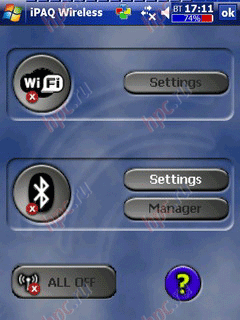 |
| Wireless Manager in the HP 4700 |
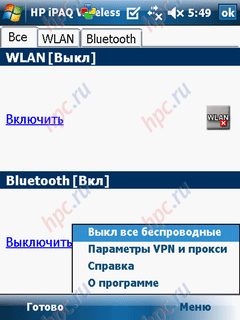 |
| Wireless Manager in HP 214 |
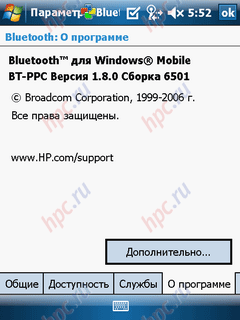
Used the drivers for BlueTooth Broadcom, differences in the management of BlueTooth, compared with the iPAQ 4700 is not, however, used a new driver version - 1.8.0 (by 4700 - 1.7.1). BlueTooth profiles as a whole remain unchanged, adding only "Synchronize PIM (contacts, calendar events) and" Remote computer management ". We list just in case the standard job profiles BlueTooth:
- connection to the keyboard;
- exchange business cards;
- connecting to personal networks;
- network connectivity;
- remote viewing of files;
- ActiveSync via BlueTooth;
- a headset;
- Internet via the phone;
- sound equipment;
- search services on the device BlueTooth.
Job wireless module is stable, supported by 2.0 standard. Despite the fact that the iPAQ 4700 using an outdated standard of 1.2, the difference in file transfer speed is not. However, the undoubted advantage is the fact that the lowest energy consumption BlueTooth 2.0, compared with revision 1.2. This, it can be assumed due to a long time PDA mode GPS-navigation, but more on that below.
 |
Connection via Wi-Fi is also stable, although at different forums, users have expressed complaints about his work. "Glitch" is manifested in falling asleep, the device with the included Wi-Fi. Turn on the device for about two minutes after that, and in some cases had to "wake" it resets. On the test sample was not observed anything like this, it is likely that in our hands the CPC came with already installed the patch for Wi-Fi, which is on the official website of HP, although the description of this update says only that it allows the device itself to switch between available access points when in the zone of visibility is a receiver with the best signal. On the software driver Wi-Fi on the device itself is silent. Run Wi-Fi as well as BlueTooth, - from the desktop via aypakovsky manager:
Help file available - help for beginners:
| Unfinished Piece for piano in the bushes "width =" 240 "height =" 320 "/> |
Wi-Fi connection keeps stable, pages loaded noticeably faster than 4700. Without significance that our hero can be used for VoIP telephony. In a brief statement can be read about this standard:
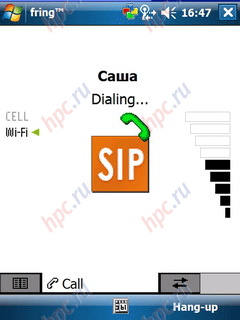
We tested VoIP with Fring program and the Russian operator SipNet, as well as various network Wi-Fi (personal home and public). Calls made to fixed and mobile numbers, and in all cases was the place to be the following fact: I hear all pretty good, but quietly, but instead of my voice, people either did not hear, or hear the wheezing.
 |
Several frustrating lack of built GPS-receiver. Satellite navigation is now so widespread that the receiver is inserted even in low-end models, so logically one would expect its presence in the 214-meters, given the very large screen including PDAs, the most capacious battery life, the very large body. Apparently, the main problem HP seen in the fact that the price of top-end handheld turned out to be within reason. And therefore denied bedolage the built-in GPS. However, when you connect the GPS-receiver via Bluetooth or via CF or SD slots using the navigation is a pleasure, mainly due to the large and bright VGA-screen, which can be seen in the sun, and of the processor also allows you to not worry about what you will hear a voice command "turn left" is after proedesh turn.
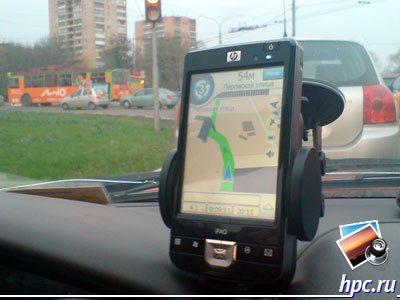 |
On the forums you can find user complaints about the fact that the 214th quiet speaker, and if the kerf music or open a window, you will not hear that said a woman-robot. In our opinion, the speaker is rather loud, the only disadvantage is that it is located on the "back" at the CCP. Maybe if it located on the front side, the sound would be louder. Many expected the iPAQ USB-host. And, without seeing, began to make his own.
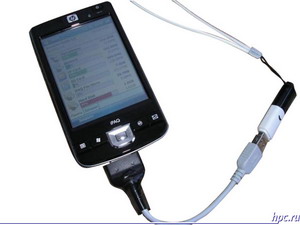 |
| Homemade cable USB-host |
The fact that the "artisans" happened, said that the support function of the device and it is likely that over time there will be accessories that allow you to connect to the PDA everything your heart desires. Assembly is a very interesting out reshuffle: syncing PDA is charged if you use miniUSB. From a wide slot in the synchronization of your PDA is not charging, if not for him alone to connect the charger. Also, the PDA provides "foolproof": stick together and miniUSB, and corporate plug you do not get.
Work Offline
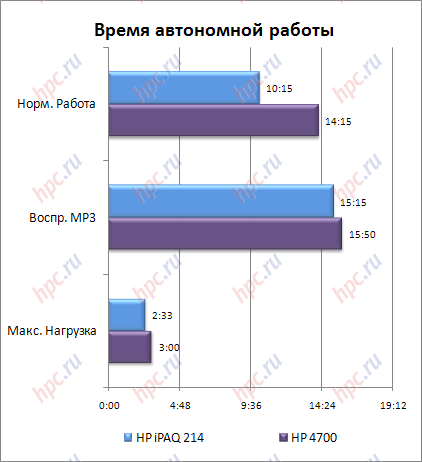
While reading at a minimum illumination AIPAC spent 10 hours and 15 minutes. While reading at the secondary level illumination iPAQ 214 with standard battery 2200MAh worked 7:00 15 minutes, while his brother - iPAQ 4700 - 8 hours (with two-year battery usage 1800MAh). For the sake of the experiment in 4700 was inserted into the battery of the 214th - 2200MAh, and in the 214th - the battery from 4700 - 1800MAh. While reading at a minimum illumination 4700 spent 13 hours 15 minutes, and the 214th - 4 hours 21 minutes. Under the maximum load in the wireless communication module, vykruchennoy the maximum illumination and playing video CCP spent 2:00, 33 minutes. While viewing the video (640x480, test clips) on the middle backlight turned off, wireless modules AIPAC worked 4 hours 10 minutes. While playing music at full volume through wired headphones through Windows Media Player with the screen and wireless interface PDA lasted 15 hours 15 minutes. In navigation mode, GPS - BlueTooth enabled and machine connected to BlueTooth-receiver, the light at the secondary level, a map for navigation is on the SD-card - the device has shown excellent results: 6 hours 25 minutes! Truly, this device is designed to navigate!
 |
Software
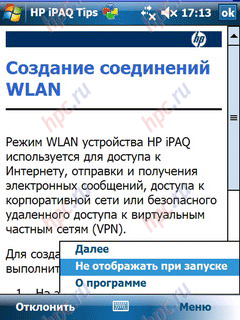
HP iPAQ Tips - built-in help. "Crawls" every time you start the PDA, you can disable it.
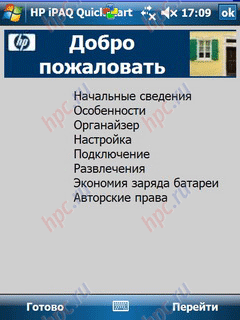
For it is integrated into the program help index - HP iPAQ Quick Start.
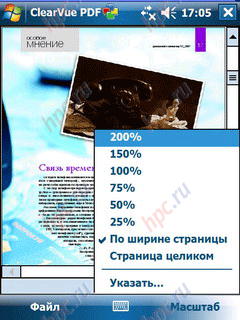
ClearVue PDF - a program for easy viewing of PDF. It is worth noting that a full-featured version. A purchase of this program for other PDAs will cost you about $ 10.
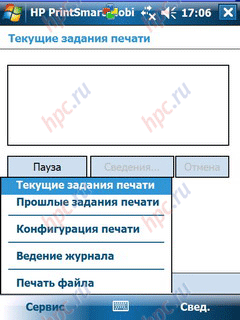
HP Print Smart Mobile - a program for printing documents with the CCP is supported by a number of different profiles, such as: printing via BlueTooth, network
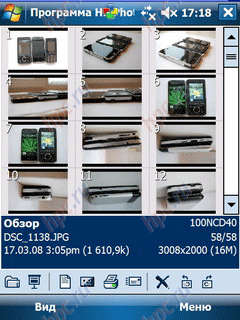
HP Photosmart Mobile - an interesting program for viewing images. There is a preview of the contents of a folder, view EXIF-information about the file.
It is easier and quicker and smarter than the standard viewer, but to a functional Resco Photo Viewer is still falls short: loading of large images is interrupted with an error of memory, an attempt to view the details was not successful, while Resco Photo Viewer has shown a more readable result.
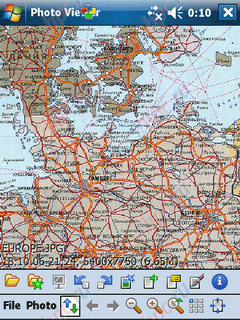 |
| Resco Photo Viewer |
| Unfinished Piece for piano in the bushes "width =" 240 "height =" 320 "/> |
| HP Photosmart Mobile |
Unfortunately, the 214th lost standard for iPAQ 4700 program to control running applications, which, if you remember, "hung" on a separate button with an arrow in 4700. On the desktop, provides free information panel on RhinoCode - TodayPanel Lite V3.8. It displays the status of memory, batteries and light sensor with the ability to control:
In general, and we can say that the new iPAQ is not replete with some very necessary to the user programs, offering the buyer to select the necessary software on their own. However, care very much nesveduyuschih users to file online help still has a place to be.
Supplied
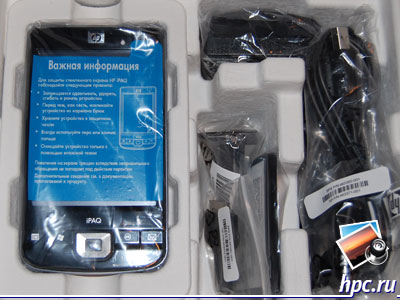
iPAQ 214 comes in a colorful box, where the pure Russian talks about the features located within the device. We can not say that the packaging was better, enticing than it was.
The set includes:
- Removable / rechargeable Lithium-Ion Battery 2200 mAh,
- AC adapter with power cord length of 1,83 m,
- A smart cable with connector for synchronization and charging
- stylus
- Leather Case-pocket
- CD HP iPAQ Companion,
- voucher to receive free software;
- documentation set.
The set we found no cradle, so the usual solutions for top models, HP (4700, 4150). Let's hope that it will separate accessory. Also showed only one stylus. On the background of the fact that the stylus is totally redesigned, and in case of loss for the first time to find a replacement for him would be simply impossible, you might consider it a serious miscalculation.
Conclusions
To what conclusion can be reached by estimating the real situation? A play for our grand really is not over as yet not come out really stable firmware, not arrived, accessories for a new hero among handheld computers. Difficult to accept that the iPAQ 214 - a sequence of 4700. This is HP iPAQ 114, which tightened VGA and CF, so forgive me this pun. Unlikely to repeat the success of new iPAQ 4700. Perhaps, the first party is swept from the shelves fans of HP, but more out of habit. Lack of integrated GPS and accessories, as well as the size to play a role in purchasing. The success he is guaranteed only in the absence of competition from Acer, Fujitsu-Siemens. Wait and see. I think that our review has not yet completed. Pros:
- capacity battery;
- support SDHC;
- miniUSB;
- long time to work with GPS;
- no glare and does not require a four-screen film.
Cons:
- plastic enclosure;
- large size and weight;
- fiddly joystick;
- lack of graphic accelerator;
- Mediocre sound quality
The authors, translation: